Some Other Place

“Thus we know we are near to some other place on the map which is not yet visible on the countryside.” CS Lewis, The Pilgrim’s Regress

About noon we hopped aboard the 30 minute train to Madrid where we waited an hour before boarding the 2.5 hour train to Barcelona. The countryside, with its rolling hills and farms did indeed hide the city until we were upon it. First impressions of Barcelona? It’s a cosmopolitan community on a grande scale with treed parks, charming architecture that reaches to the sky creating labyrinthian lanes laced with boutique artisan studios and eateries. We’re staying in an apartment near the Bohemian neighbourhood so there’s a young vibe and a lot of late night noise. But nothing like little Toledo that rocked into the wee hours of the morning and awoke us at 8:00 am sharp with echoing cannons booming from river bank to river bank. Ladysmith will seem like a monastery after Spain!

After a second attempt we found a tapas bar, happy to serve gluten free for me. Delicious! We meandered through Santa Maria Cathedral — simply structured with granite in the Romanesque style. Barcelona is our last stop in Spain and we plan to be here for 5 nights before boarding our train to Paris on Tuesday for our Wednesday flight home. And now for bed.

P1050644 P1050645 P1050647 P1050648 P1050649 P1050650 P1050651 P1050652 P1050653

Posted in Art, Food, History, Holidays, Travel | Leave a comment

A Great Company of Other Pilgrims

“Then I saw that they were received into a great company of other pilgrims…” CS Lewis, The Pilgrim’s Regress

On our way out of Toledo, Corpus Christi celebrations were in full swing. What a send-off!

P1050585 P1050592 P1050610 P1050619 P1050630 P1050631 P1050635 P1050636

Posted in Faith, History, Holidays, Travel | Leave a comment

All the Crowd

“He could not get free…and all the crowd of people were moving on in the same direction, with a sinister happiness on their faces.” CS Lewis, The Pilgrim’s Regress

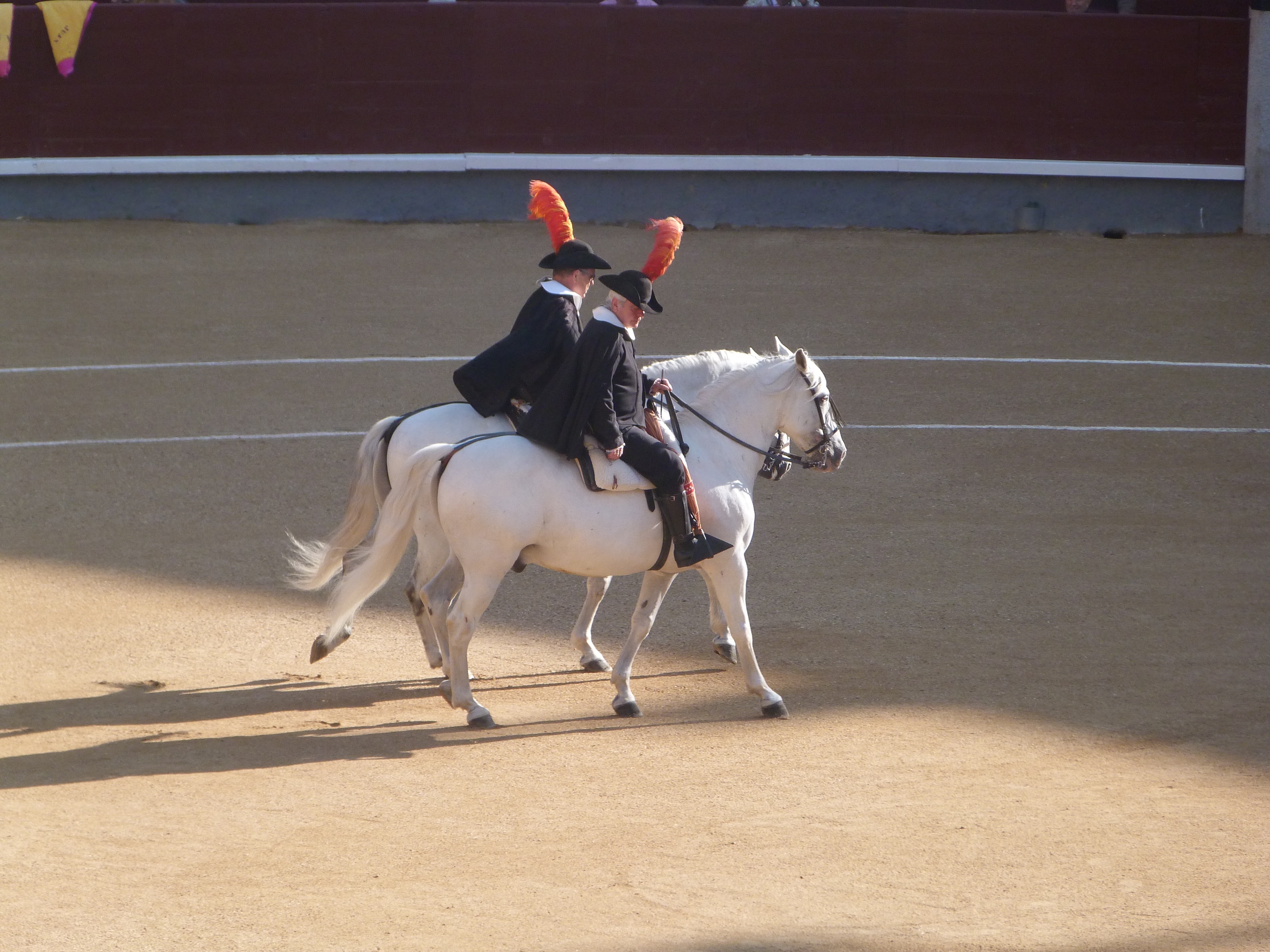
There are some things in other cultures that bewilder me and bull fighting is the thing that stumps me in Spain. I’m not sure I would say the participants walk about with sinister happiness but the crowd is key and by some strange magic, there is exuberance.

By late afternoon on our last day in Madrid after having visited both the Prado Art Museum with its 3,000 canvases by world renowned painters, and then a visit to the Reine Sophia Art Museum where mixed medium, paint and sculpture takes the viewer from Modernity into Post-Modernity, I was really done for the day. My feet burned and once I sat down, they refused to be stood upon any longer.

That’s how it came about that my man took a 30 minute metro train to the bull-fight all by himself. I relaxed in the bath, and then in bed with a book while he engaged in one of Spain’s most notable traditions.

Travel sometimes means observing and engaging in activities that feel strange to our sensibilities. I try not to judge another culture but rather attempt to understand how a tradition came about, why it continues to be important and what it says about the people who practice it. I have much to learn.

P1050370 P1050375 P1050382 P1050392 P1050394 P1050397 P1050398 P1050402 P1050417 P1050429 P1050430

Posted in Community, Travel | Leave a comment

Folk Tales

“And the sweetness came not with pride and with the lonely dreams of poets nor with the glamour of a secret, but with the homespun truth of folk-tales…” CS Lewis, The Pilgrim’s Regress

No sooner had we arrived in Toledo, than the town began its transformation from stark, stone medieval walls — plain and warm — to flower-bedecked balconies, 16th and 17th century tapestries hung with pride from private windows and public spaces like the town hall, banks and storefronts. Preparations for Toledo’s most important holiday, Corpus Christi, were underway and celebrants gathered in plazas and in churches singing and kissing one another with the joy that marks the occasion. The holiday celebrates the body of Christ, or as far as I can tell from my Protestant enculturation, Jesus Christ Incarnate.

Not a block from our hotel sits the Plaza de Mayor (the main square). Stage construction started early afternoon and by 8:00 sound checks were nearly done — fine tuning for the open-air concert to come. We hung around with the Toledoans until 8:45. Apparently, a hometown girl-turned-famous (Ana Alcaide) and her band were giving a concert on the Spanish legends put to music. Her interest and impressive education focus on instruments and music of days long past, better known as folk. Although we speak very little Spanish, her story-telling through music broadened our Spanish history. The evening’s magic will linger long from the sweetness of these 2 days in Toledo.

And I’ve enjoyed another sort of sweet — that of finding a gluten-free gelato spot run by a young woman, who went out of her way to ensure a good Toledo gelato-eating experience. And that’s how folk tales begin, isn’t it? One story upon another, passed along in the company of fellow pilgrims. A little bit of homespun truth from Toledo for your day, friends.

P1050469 P1050472 P1050473 P1050475 P1050481 P1050483

P1050489 P1050493 P1050495 P1050498 P1050500 P1050525 P1050526 P1050532 P1050545 P1050546

Posted in Food, History, Holidays, Travel | Leave a comment

Plodding Along

“‘The young gentleman is soft, sir, very soft,’ said Drudge. ‘He is not used to this sort of thing. We’ll have to help him along…Then they plodded on for many more miles.'” CS Lewis, The Pilgrim’s Regress

Many months ago when plans to travel in Spain were in their infancy, and our research encouraged us to spend 3 days in Madrid (a top destination), we booked into a small hotel in the centre of the old town. I’m uncertain where my presuppositions took root but I had always thought of Madrid as a sprawling, noisy metropolis that was better travelled through than stayed in. If my graduate studies have taught me anything about presuppositions, it’s that it’s good to have them challenged. I can either defend previous held ideas with good reason, or adapt them to a better argument.

All that to say, Madrid is what I expected. Maybe I am soft and unaccustomed to big city sprawl. Maybe I’ve hit a wall and am feeling some travel fatigue so need some helping along. I’ll give it that. But maybe the city does lack charm and being here feels a little like plodding along. I am looking forward to old world Toledo a few miles down the road.

But all was not lost in Madrid. Here are just a few things we observed: a higher than average police presence, a stamp and coin market, touristy “Segway Human Transporters” for rent, street buskers, children dressed in their Sunday best, soccer garb, a hearty welcome for Syrian and Iraqi refugees, an impromptu choir practice accompanied by pipe organ at the “Catedral”, and a lovely, warm sunshiny day!

P1050311 P1050314 P1050315 P1050319 P1050324 P1050334 P1050337 P1050338 P1050339 P1050341 P1050343 P1050345 P1050346 P1050347 P1050363

Posted in Holidays, Learning, Travel | Leave a comment

And Some Carried Water

Then I saw that chairs were brought for the travellers and some of the young men of the house carried water to them to wash.” CS Lewis, The Pilgrim’s Regress

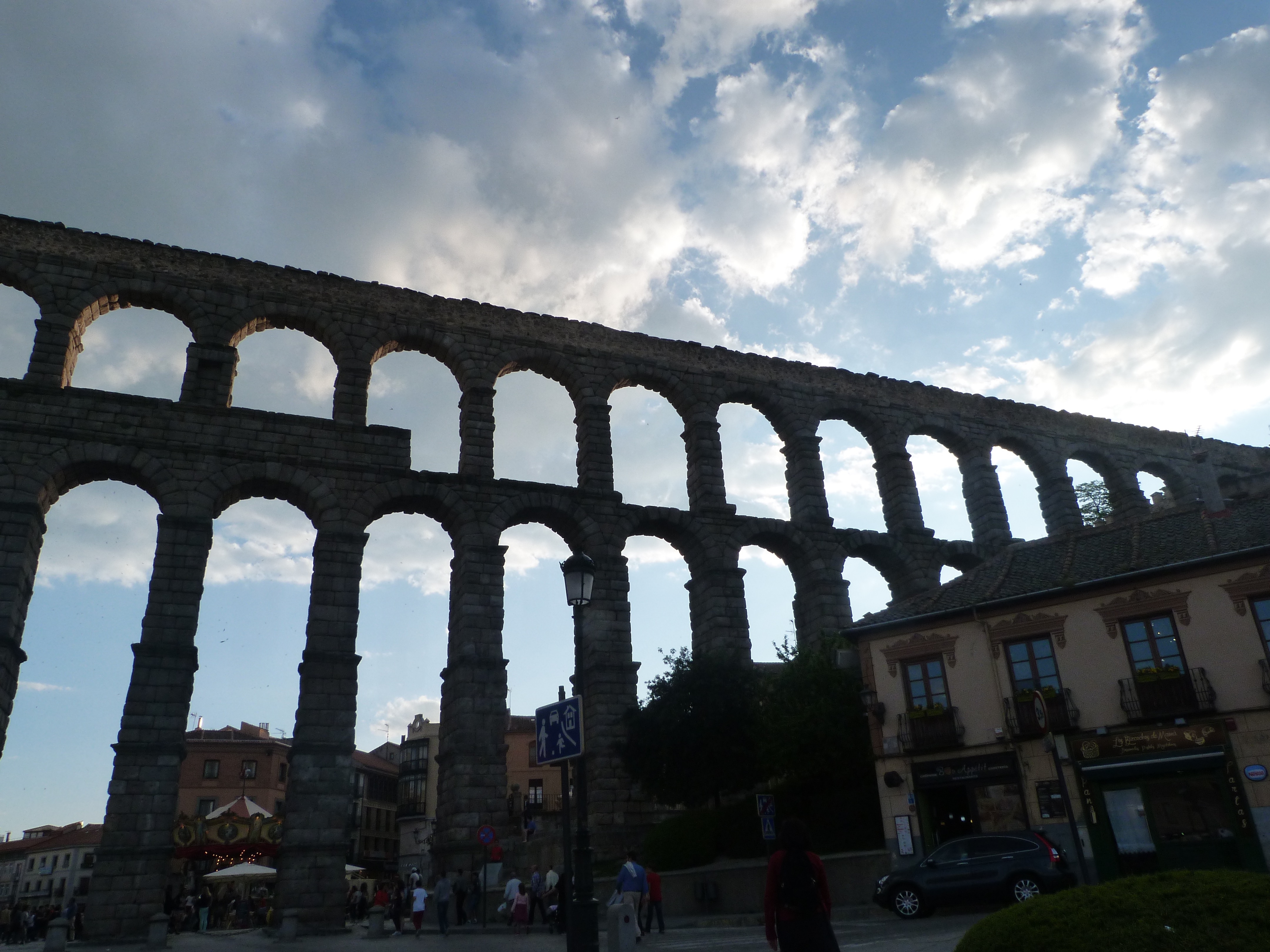
2,000 years ago the Romans built a nine-mile aqueduct from Rio Frio into the hill town of Segovia to water thirsty Roman militia. The 100 foot high structure still carries a stream but functions more as a backdrop to the town’s social calendar and draws tourists from all over the world. Today, the finish line of a cycling race marked the lowest point of the arches where MacDonald’s has set up shop. It’s a wonder the golden arches weren’t painted on the Roman ones.

The town functions as a bedroom community to Madrid with its cooler high mountain temperatures and quick, 30 minute commute by train. The tourist industry is also in full swing in little Segovia!

P1050260 P1050267 P1050270 P1050274 P1050279 P1050282 P1050293 P1050295 P1050298


Posted in History, Holidays, Travel | Leave a comment

Studying in Salamanca

“He [Aristotle] held that the end of mortal life was to put on immortality as much as might be. And he also said that the most useless of studies was the noblest.” CS Lewis, The Pilgrim’s Regress

Salamanca is a university town with oodles of students carting books from one section of town to another. As my friend, Janet, reminded me, people have been studying in these same buildings since 1230 AD and so UNESCO has made it a world heritage site. We toured the university grounds which are integrated with the town or more accurately, the town has done the lion’s share of the integrating. Apparently, it all began when a group of young learned priests began gathering to discuss ideas and the people who thought them up — like Aristotle and Thomas Aquinas.

The place is magical! Here are the photos. And one note — the final photo is of the student seating in the oldest lecture hall — still in use today. Oh, I am so thankful for the desks at Regent!

P1050167 P1050176 P1050177 P1050178 P1050183 P1050190 P1050206 P1050215 P1050220

Posted in History, Holidays, Learning, Travel | Leave a comment

Celiac in Spain

“I have brought you a loaf…” CS Lewis, The Pilgrim’s Regress

Bread, it is said, is the staff of life and everywhere we eat, bread is brought to table first. The trouble with bread is that my body thinks it is poison. Well, it’s not bread specifically but the gluten protein that wheat, rye, and barley contain. I will spare you the details of past poisonings — suffice it to say, it isn’t pretty.

Travelling in a foreign country means communicating my food needs to servers who often do not speak English and may not understand gluten in their own tongue, let alone mine. That’s why it’s important to make a few preparations prior to our trip.

Through the Canadian Celiac Association I found a website that offers printable cards with brief explanations of my condition in as many languages as you can imagine. I print them at home and carry a few of each in the language of the countries we plan to visit. When I order a meal in a restaurant, I do my best to choose a menu item that looks safe and present my card to the server. I ask if my condition can be accommodated. And I learn how to say “no gluten” in the language of the day.

For example, I wanted to try the traditional Spanish dish of paella for lunch today. We found a photo of seafood paella on the menu, then I asked the server if she could accommodate me (using my card). I pointed to myself and said, “sin gluten”. She shook her finger at me with a smile, and pulled us outside, pointing to another restaurant “in one minute walk” that could accommodate my food needs. We found the place down a narrow alley, just as she said. As it turned out, the owner and his small son are celiac. He set us up at an outdoor table, and brought me a loaf of gluten-free baguette — warm and soft on the inside and crusty on the outside. The seafood paella was delicious with loads of fresh prawns, clams, mussels, saffron and pork, of course. The bread was truly a gift! If you happen to be in Salamanca, look for Jero Restaurant, Calle Melendez, 11.

It seems that every place has its culinary specialty. In Spain, one of those is pinchos or tapas, as Spaniards to the south call them. Ordering pinchos takes quite a lot of courage. And let it be known that I am a quiet, rather shy person in unfamiliar company so ordering pinchos put me somewhere to the far left of my comfort zone. The setting is chaotic — with masses of bodies calling out their orders to the one main server behind the bar. I heard no English, only Spanish. Well, to be specific, the language is Euskara, not even a twist on Spanish but closer to Hungarian and specific to the Basque people. We found a pinchos bar that Rick Steves’ guide book recommended — something with gluten-free options. (Look for Taberna Gandarias, 31 de Agosto 23, San Sebastian) I moseyed up to the bar (at my eye level) and showed the server my card. “Si!” Okay, so, then I was stuck. He smiled and handed me an English menu, which we took to the side bar and chose 2 or 3 things that looked safe. I pushed my way back to the bar — the server looked pleased, and I shouted my order while he indicated “si” or “non” and offered alternatives. The food was amazing and I was well rewarded for my efforts.

Today, we arrived in Segovia. It was 29 degrees celsius when we returned the rental car and hiked up the hill to our hotel. There were two gelato spots within easy reach, so my man ordered a lovely looking sorbet. Sadly, none were “sin gluten”. And that’s the way it goes sometimes.

It may sound strange to say, but here a little prayer is in order: “Lord, grant me the serenity to accept the things I cannot change, courage to change the things I can, and wisdom to know the difference. Amen.” Or in French, “ca c’est”.

Being celiac and travelling can present some real challenges, especially if the travel is on foreign terrain. But when someone brings me a gluten-free loaf or gluten-free tapas, or gluten-free paella, I feel ever-so-grateful for their effort, for whomever has gone here before and for the joy of good food.

I want to add, that ever since my diagnosis 11 years ago, my husband has been my greatest and most patient advocate. Often the food I need can only be had in places that prepare it from scratch and that means higher cost. Or we try several places before we find something that works. Or we opt for a picnic of cold cuts and cheese, pickles and tomatoes. He never complains. And I feel so very grateful for his patience, his care and his commitment to my good health.

Posted in Food, Health, Holidays, Travel | Leave a comment

The Language of the Heart

“I am coming to look more and more at the language of the heart. Logic and definition divide us: it is those things which draw us together that I now value most — our common affections, our common delight in this slow pageant of the countryside, our common struggle towards the light…and if you will trust an old traveller, the seeking is the finding.” CS Lewis, The Pilgrim’s Regress

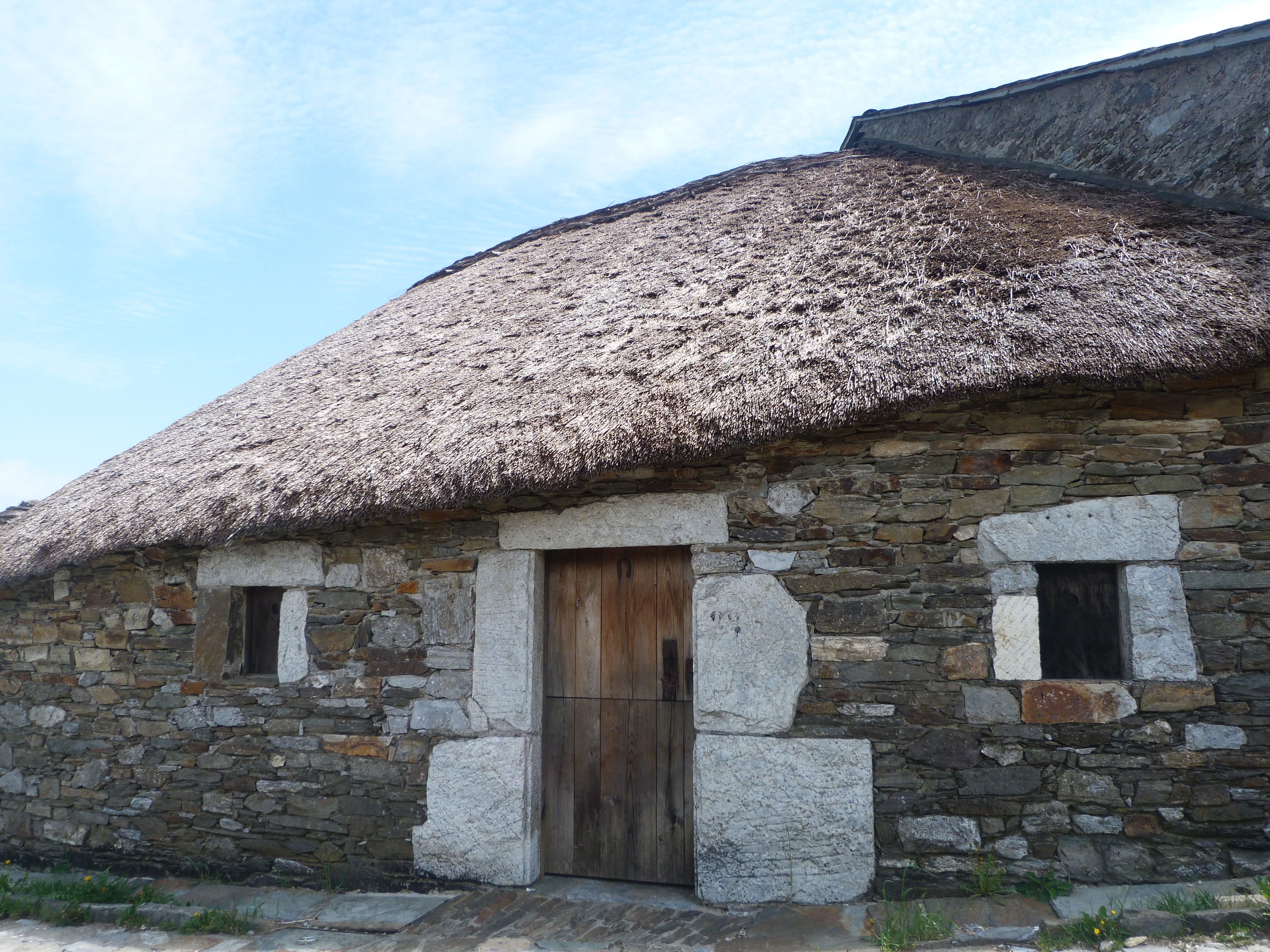
Although we travelled by car from Santiago de Compostela to Salamanca today, I will post a few more photos of the Camino and around Santiago before Salamanca because it is such a place of the heart. Salamanca tomorrow!
P1050083 P1050098 P1050103 P1050114 P1050122 P1050123

P1050130 P1050131 P1050136 P1050139 P1050141 P1050143 P1050144

P1050161 P1050163 P1050164

Posted in Food, History, Holidays, Travel | Leave a comment

A Moderate Allowance of Travelling

“Here again, the secret of happiness lies in knowing where to stop. A moderate allowance of travelling — enough to quiet, without satiating, a liberal curiosity — is very well.” CS Lewis, The Pilgrim’s Regress

We’ve heard several pilgrims say that making the Camino your Camino lends itself to the best experience. We met a Frenchman who has walked 10 days of the Camino every year for 6 years. He knew when to stop, and finally reached Santiago yesterday. Apparently, a lot of Europeans walk part of the trail only to pick up where they left off next time around.

We met an 74 year old Australian woman who is walking alone for the 3rd time. She says it’s always an emotional experience and we saw the connections she had made as she and a fellow pilgrim wept as they parted.

A Vancouver woman walked with her 3 girlfriends a few years ago and she has returned twice since, to travel partly by train and partly on foot.

Since the final 100 km is necessary to obtain the coveted Santiago de Compostela stamp, many pilgrims begin in Burgos or Ponferrada. For those who walk past the Monasterio de Irache, the reward is a free cup of vino from the spigot outside. And it’s top quality stuff — only the best for encouraging pilgrims on the Way.

On our arrival at Santiago de Compostela, the Cathedral is a must-see. The word on the street was to get an early spot for noon mass where a nun opens the service in song — the voice of an angel, we heard. From what I could gather from my minimal Spanish the sermon reminded peleginos that while life is a pilgrimage, our true home is in Christ. The service ended with the dramatic swinging of a 40 lb, sterling silver incense burner, wielded from a 3 inch thick rope by 7 men in burgundy robes. Astonishing, really.

Pilgrims from all over the world make this trek and the ambience of the city is one of quiet respect. But the city isn’t mile 0. We drove out to the coast, to the edge of northwest Spain to the 0 marker and found evidence of burned hiking shoes, hats, shirts, and books. As tradition has it, pilgrims burned their clothing at the end of their journey. In medieval times, disease and unsanitary conditions demanded it. Now it marks the end of a pilgrimage.

P1050054 P1050055 P1050057 P1050066 P1050068P1050071

Posted in History, Holidays, Travel | Leave a comment